


Prepare Your Oil Boiler for Winter: A Step-by-Step Guide

Why Oil Boiler Winterization in Reading PA Matters for Your Home
Oil boiler winterization reading pa is essential for homeowners in Berks County who depend on heating oil to stay warm. In Reading, PA, where January temperatures can dip low, a properly maintained oil boiler is the difference between staying cozy and facing a costly emergency. Without proper preparation, your system could fail when you need it most, leaving you with frozen pipes and no heat. Since many households in the Northeast rely on heating oil, winterization isn't optional—it's a critical step to ensure your family's comfort and safety.
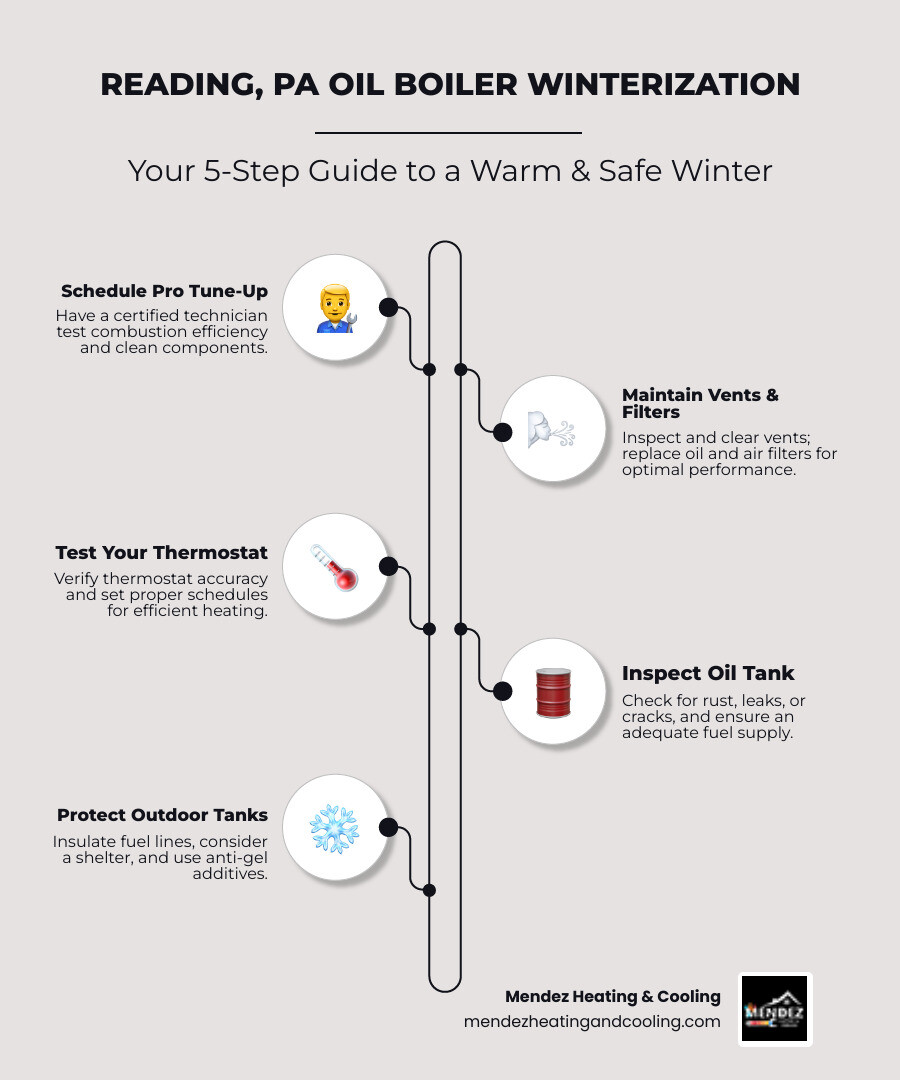
Essential Steps for Oil Boiler Winterization:
- Schedule a professional tune-up with a certified technician to test combustion efficiency and clean internal components
- Inspect and clear vents to prevent carbon monoxide buildup and ensure proper airflow
- Replace oil and air filters to maintain optimal system performance
- Test your thermostat to confirm accurate temperature control
- Check your oil tank for rust, leaks, and adequate fuel supply
- Protect outdoor tanks with insulation and anti-gel additives
- Watch for warning signs like strange noises, odors, or inconsistent heating
If you're looking for comprehensive heating solutions, explore our heating services in Reading, PA, or schedule your professional boiler maintenance appointment to ensure your system is winter-ready.
Why Winterize? The Key Benefits of Annual Oil Boiler Maintenance
As the leaves start turning in Reading, PA, and that first chill hits the air, it's time to think about your oil boiler. Getting your system ready for the cold months isn't just a task on your home maintenance list—it's about protecting your family, your wallet, and your peace of mind.
Let's talk about why oil boiler winterization reading pa is one of the smartest investments you can make before the snow starts falling.
Improved Efficiency and Lower Energy Costs
A well-maintained oil boiler uses significantly less fuel. During a proper tune-up, a technician ensures it burns heating oil cleanly and efficiently, so every gallon delivers maximum heat instead of being wasted. The U.S. Department of Energy confirms that regular maintenance helps oil-fired systems operate at peak efficiency. When your boiler isn't straining through dirty components, it uses less fuel, which can lead to lower heating bills. That's money back in your pocket rather than spent on wasted fuel.
Increased System Lifespan and Decreased Chance of Major Repairs
Annual winterization prevents unexpected breakdowns on the coldest days. It allows a trained technician to catch small problems—like a worn part, early corrosion, or a minor leak—before they become major failures. Addressing these issues early is far simpler than dealing with a complete system shutdown in the middle of winter. Regular maintenance genuinely extends your boiler's life, protecting the significant investment you've made in your home's comfort year after year.
Improved Safety and Carbon Monoxide Prevention
Safety is a primary reason for winterization. An improperly maintained oil boiler can be dangerous, with the biggest concern being carbon monoxide (CO). This odorless, colorless gas can be deadly. If your boiler's exhaust flue or intake pipe gets blocked by soot or debris, these toxic gases can build up inside your home. Professional winterization includes a thorough check of all ventilation systems. A technician will inspect and clear the exhaust flue and intake pipe, ensuring combustion byproducts are vented safely outside. This crucial step helps protect your family's well-being.
Reliability and Peace of Mind
Knowing your home is ready for winter brings incredible peace of mind. When you've winterized your oil boiler, you can rest easy during a blizzard, confident that your heat will hold out. You avoid the stress of emergency calls and enjoy consistent, dependable warmth all season long. You can simply enjoy the winter, knowing your family is warm and comfortable. For Reading, PA homeowners who want that assurance, professional boiler maintenance ensures your system is inspected, cleaned, and ready to perform when you need it most.
Your Essential Checklist for Oil Boiler Winterization in Reading PA
Getting your oil boiler ready for winter doesn't have to be overwhelming. This essential checklist for oil boiler winterization reading pa combines professional service with simple DIY checks to keep your system running smoothly all season. By addressing both the technical aspects that require a trained eye and the maintenance tasks you can handle yourself, you're setting your home up for a warm, worry-free winter.

Step 1: Schedule a Professional Tune-Up
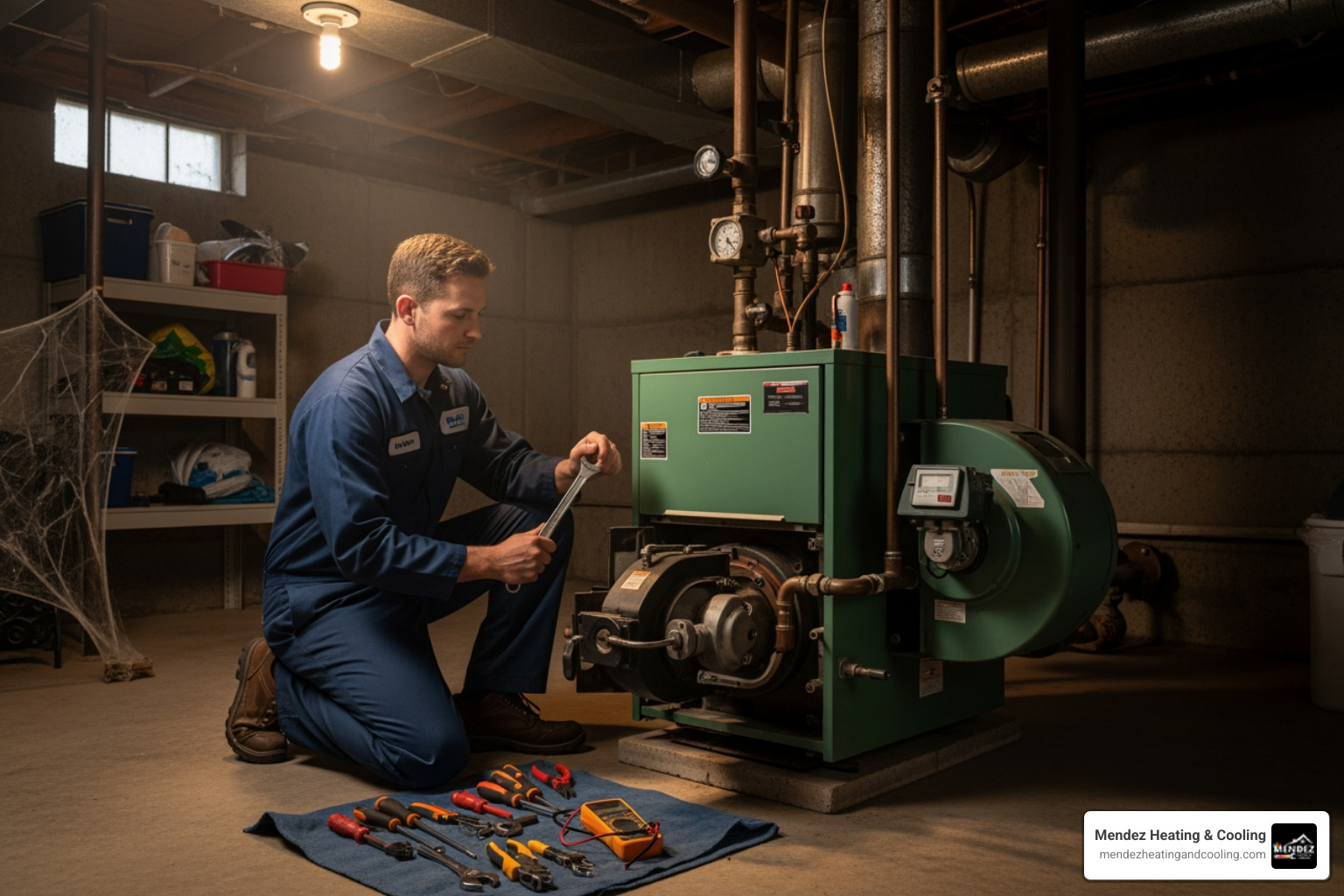
The most important step is scheduling a professional tune-up with a certified technician in late summer or early fall. This comprehensive service goes deep into your system's performance and safety. A technician will conduct a combustion efficiency test to ensure your boiler burns fuel cleanly, which impacts your fuel costs. They will also clean internal components, removing soot and grime that hinder efficiency. For safety, the technician performs a safety control check, verifying that all protective mechanisms are working correctly. They will also inspect the burner, fuel lines, and connections for wear or leaks. This detailed inspection provides peace of mind that DIY checks can't match. When you're ready, visit our boiler maintenance in Reading, PA page to schedule your appointment.
Step 2: Inspect Vents and Clear the Area
Your boiler's ventilation system is critical for safety. The exhaust flue removes harmful gases like carbon monoxide, while the intake pipe provides fresh air for combustion. Blockages are a serious hazard. Check where these pipes exit your home for obstructions like bird nests, leaves, or soot buildup. Also, keep them clear of snow and ice during winter. While you can clear away visible debris, call a professional if you see excessive soot or suspect an internal blockage, as this could indicate a combustion problem. Inside, keep the area around your boiler clear of flammable materials and clutter to ensure proper airflow and safe access.
Step 3: Change the Oil Filter and Air Filters
Filters protect your heating system from contaminants. The oil filter prevents impurities from clogging the fuel line; a technician will replace this during your professional tune-up. You are responsible for changing the air filters regularly. Dirty air filters restrict airflow, forcing the boiler to work harder, which reduces efficiency and can shorten its lifespan. Experts recommend changing air filters every 2 to 3 months during the heating season. Keep extra filters on hand to make this simple but important DIY task easy to complete on time.
Step 4: Test Your Thermostat and Controls
Your thermostat is the command center for your heating system. Before winter, ensure it's working correctly. Test its thermostat accuracy by turning the heat up and confirming the boiler responds and cycles off at the set temperature. If it seems off, it may need replacement. If you have a programmable thermostat, review your heating schedule. Setting schedules to lower the temperature when you're away or asleep can significantly reduce heating costs. Smart thermostats offer even greater control, learning your habits and allowing remote adjustments from your phone. The benefits of programmable thermostats for oil boiler systems include better fuel efficiency, reduced system wear, and improved convenience.
Preparing Your Oil Tank for a Reading, PA Winter
When considering oil boiler winterization reading pa, don't forget the oil tank. A compromised fuel supply will render even a perfectly tuned boiler useless. Preparing your oil tank is just as crucial as servicing the boiler.
Tank Prep for Oil Boiler Winterization in Reading PA
Whether your tank is indoors or out, inspect it thoroughly before winter. A careful visual inspection can prevent future problems. Look for rust (especially at the base and seams), cracks, leaks, or wobbly legs. Be aware that fresh paint can hide underlying rust, which often starts from the inside out due to water accumulation. The Pennsylvania Department of Environmental Protection advises checking for corrosion, pitting, holes, and leaky pipes or fittings. You can find their full Tips For Residential Heating Oil Tank Owners for more details, with additional resources at www.dep.pa.gov. For added protection, consider secondary containment structures to prevent environmental contamination in case of a leak.
Fuel Supply for Oil Boiler Winterization in Reading PA
A clean, full fuel supply is essential for winter. Check the gauge regularly and schedule a delivery when it reaches the quarter-tank mark. Ordering fuel in the fall helps you avoid the winter rush. More importantly, keeping the tank full minimizes condensation. Empty space in the tank allows water to form, which sinks and leads to sludge formation. This sludge can clog fuel lines and filters, causing a system shutdown. A full tank reduces the air space where condensation can occur, protecting your entire heating system.
Protecting Outdoor Tanks and Fuel Lines
Outdoor oil tanks require extra protection from Reading's winter. Insulate fuel lines running to your home to prevent the oil from gelling in freezing temperatures. A tank shelter can shield the tank from snow and ice, but ensure it's well-ventilated to prevent corrosion-causing moisture. After snowfalls, clear snow and ice from the tank using a soft brush; avoid salt or chemical deicers, which cause corrosion. Anti-gel additives can be mixed with your heating oil to prevent it from thickening in the cold. Ask your fuel supplier for a recommendation. Finally, mark the location of your fill pipe with a stake so delivery drivers can find it easily in deep snow. These steps are vital for ensuring a reliable fuel supply all winter.
Warning Signs: When to Call for Professional Boiler Repair
Even with proper oil boiler winterization reading pa, your heating system might still signal that something is wrong. Think of these warning signs as your boiler's way of asking for help before a small problem becomes a winter nightmare. Catching these issues early can mean the difference between a simple fix and a major system failure.
Our team for boiler maintenance in Reading, PA has seen it all, and we're always here to help when these warning signs appear.
Common Signs Your Oil Boiler Needs Attention Before Winter
Your boiler should run quietly in the background. When it acts up, pay attention to these signs:
- Loud noises: Banging, whistling, or rumbling can indicate trapped air, a failing circulator pump, or sediment buildup.
- Strange odors: A persistent smell of oil or smoke is a red flag for a fuel leak, incomplete combustion, or a venting problem. These issues require immediate professional attention for your safety.
- Inconsistent heat: If some rooms are cold while others are hot, or the boiler can't maintain a steady temperature, you may have a problem with the thermostat, circulator pump, or a clogged fuel line.
- Leaks or drips: Any water or oil pooling around the boiler is a bad sign. Even small drips can signal internal corrosion or a failing seal and should be addressed before they become major leaks.
- Soot buildup: Excessive soot on or around your boiler indicates inefficient fuel burning. This wastes oil and can create a carbon monoxide risk.
Trust your instincts. If your boiler is making strange sounds, giving off odd smells, or not heating properly, it's time to call a qualified technician. Promptly addressing these warning signs can prevent a complete system breakdown.
Frequently Asked Questions about Oil Boiler Winterization
We know that preparing for winter can bring up a lot of questions, especially when it comes to something as important as our heating system. Here are some of the most common concerns we hear from our neighbors here in Berks County about oil boiler winterization reading pa.
How often should I have my oil boiler serviced?
The short answer is once a year, every year. We recommend scheduling a professional tune-up in late summer or early fall, before you rely on the boiler daily. This annual check-up ensures your system operates efficiently, which can lower fuel bills. It also extends the life of your equipment and, most importantly, confirms it is operating safely, with no carbon monoxide risks. The benefits of a yearly visit are well worth it.
What are the risks of not winterizing my oil boiler?
Neglecting oil boiler winterization reading pa can lead to serious consequences. The most immediate risk is a complete system breakdown, leaving you with no heat during the coldest days. Without heat, your pipes can freeze and burst, leading to significant water damage. There's also the danger of carbon monoxide leaks if vents are blocked or combustion is inefficient. An unmaintained boiler also wastes money by burning more fuel than necessary, driving up your heating bills. In short, skipping winterization can lead to system failure, safety hazards, and higher costs.
Are there any assistance programs in Pennsylvania?
Yes, help is available for those who need it. Pennsylvania offers the Weatherization Assistance Program (WAP), designed to help low-income residents improve their home's energy efficiency. The program focuses on increasing home comfort and safety through services like air sealing, insulation, and heating system modifications. It aims to ensure everyone can stay warm and safe during winter. If you or someone you know might qualify, we encourage you to visit the program's website to learn about eligibility and how to apply.
Conclusion: Stay Warm and Worry-Free with Professional Boiler Care
Winter in Reading, PA, doesn't have to be a source of stress. Proper oil boiler winterization reading pa is an investment in your family's comfort, safety, and financial well-being. It's about creating a warm, secure home during the cold Berks County nights.
Proactive maintenance means choosing efficiency, reliability, and safety. It ensures your heating system thrives all winter, keeping your home warm and your energy bills manageable. The peace of mind from knowing your system is prepared is priceless. You can enjoy the season with your family, free from worries about boiler failure, frozen pipes, or carbon monoxide risks.
At Mendez Heating & Cooling, we understand what it means to keep a Reading home comfortable. We're your neighbors, and our team is ready to provide the comprehensive boiler maintenance in Reading, PA your system needs. Don't wait for the first freeze. Visit our Reading, PA location page to learn more, or contact us today to schedule your winterization appointment. Let's work together to keep your home warm and worry-free all winter.
Recent Blogs


Customer Testimonials


.webp)


