


Making the Switch? Oil vs. Gas Furnace Costs & Benefits in Easton, PA

Understanding Your Heating Options in Easton, PA
Choosing between oil vs gas furnace easton pa is a major decision affecting your comfort and budget for years. Here's a quick comparison:
Quick Comparison:
| Factor | Natural Gas Furnace | Oil Furnace |
|---|---|---|
| Fuel Delivery | Pipeline to home | Delivered to on-site tank |
| Efficiency | 90-98% AFUE typical | 80-90% AFUE typical |
| Heat Output | Standard BTUs | 40% more BTUs per gallon |
| Lifespan | 15-20 years | 25-30+ years |
| Maintenance | Less frequent | More regular servicing |
| Fuel Supply | Single utility provider | Multiple supplier options |
In Easton, this choice is common. The Lehigh Valley's cold winters test heating systems, and natural gas access varies. Some neighborhoods have gas lines from UGI Utilities, while others depend on heating oil delivered to a storage tank.
Both systems provide effective heat but have different upfront costs, operating expenses, maintenance needs, and lifespans. The best option depends on your home, local infrastructure, and priorities.
If you need help choosing the right furnace for your Easton home, learn more about our furnace installation services or schedule a consultation with Mendez Heating & Cooling to discuss your specific situation.
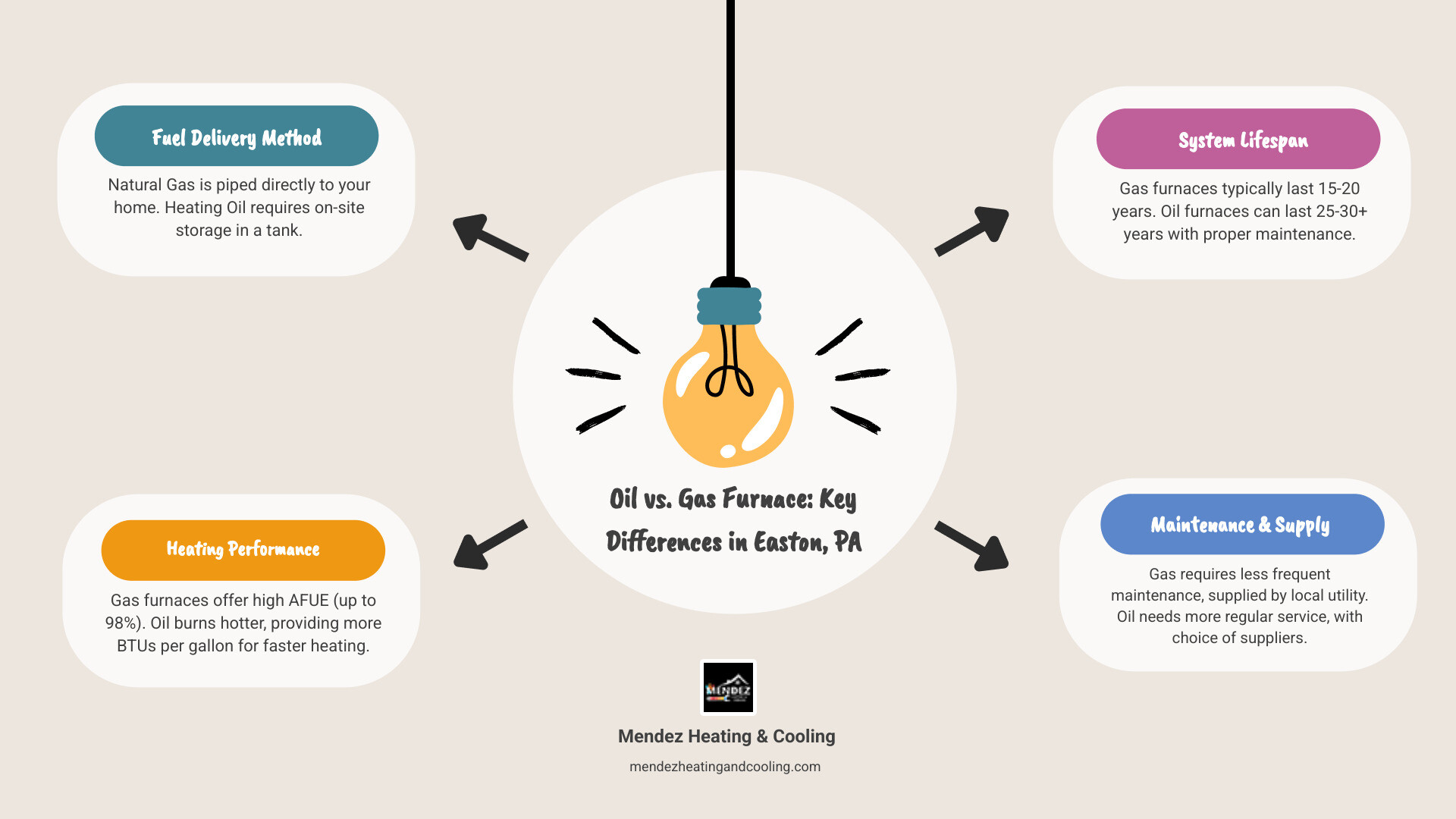
Oil vs. Gas Furnace Easton PA: A Head-to-Head Comparison
When deciding between oil vs gas furnace Easton PA options, it's important to understand how each system works to keep your home warm, efficient, and clean. We frequently discuss these differences with Easton homeowners, especially when winter highlights the need for a reliable heating system.

Efficiency and Performance
A key question is fuel efficiency: how much of the fuel you buy becomes heat? Gas and oil furnaces differ significantly here.
Natural gas furnaces are efficiency champions. Modern units have Annual Fuel Utilization Efficiency (AFUE) ratings of 90% to 98%, meaning very little fuel is wasted. This high efficiency can translate to lower operating costs.
Oil furnaces offer powerful heat. While their AFUE ratings are typically 80% to 90%, heating oil generates 40% more BTUs per gallon than natural gas. This means oil heat burns hotter and can warm your home faster, a real advantage during the Lehigh Valley's cold snaps.
Any furnace over 10 years old is likely much less efficient than today's models. Upgrading your system, whether to gas or oil, can significantly improve comfort and reduce energy bills.
Environmental Considerations
For homeowners concerned about their carbon footprint, the fuel choice is important.
Natural gas is the cleaner-burning fossil fuel. It produces lower carbon dioxide emissions than oil. A cleaner burn also means less soot buildup in your system, improving indoor air quality and reducing maintenance needs.
Oil furnaces produce higher CO2 emissions and generate soot, requiring more regular maintenance to run cleanly. Storing oil on-site also carries environmental responsibility, as spills can have local consequences, though they are rare with proper care.
Both are fossil fuels with environmental impacts. While gas generally has the edge for being cleaner, the choice isn't black and white. Choosing between oil vs gas furnace Easton PA involves balancing oil's heating power and independence against gas's cleaner operation and efficiency.
Upfront & Long-Term Financial Considerations
Financials are often a key factor when choosing between oil vs gas furnace easton pa options. Both systems have unique cost profiles. One may have a higher upfront cost but lower monthly bills, while the other might be cheaper to install but have less predictable fuel prices. Understanding these differences is key to making a confident decision.
Initial Installation Factors
The upfront investment for a new furnace depends on your fuel choice and your home's existing infrastructure.
For natural gas, installation is simpler if your home is already connected to the UGI Utilities network. If not, running a new gas line from the street involves excavation and other costs. Ductwork modifications may also be needed. For more details, learn more about our furnace installation services.
Oil furnaces require an on-site storage tank, which is an additional expense if your home doesn't already have one. The tank must be accessible for delivery truck refills.
Converting from oil to gas is a significant project. It involves installing the new gas furnace, running a gas line if needed, and safely removing the old oil tank. Your chimney or venting system might also need modification. While an investment, many find the long-term benefits worthwhile. Choosing a trusted local partner is crucial for a smooth process, and you can find more info about local furnace companies in Easton, PA to ensure you're working with trusted professionals.
Long-Term Considerations for Oil vs. Gas Furnace in Easton, PA
Your monthly and yearly heating expenses are a major part of the decision.
Natural gas offers predictability. Delivered by a single utility (UGI Utilities), pricing is generally stable, making household budgeting easier. The convenience is also a major plus: no deliveries to schedule and no risk of running out of fuel.
Heating oil prices are tied to global markets and can fluctuate significantly. This can make budgeting more challenging. However, oil provides flexibility. You can shop around among different suppliers for the best price and buy in bulk when rates are low. This control appeals to many homeowners.
Heating oil delivers more BTUs per gallon than natural gas. So, a direct price comparison isn't always accurate; you're getting more heat per gallon of oil. To make the best choice, consider the total seasonal cost of heating, factoring in your home's insulation and size. For guidance on finding the right system for your budget, explore more info about affordable furnace options.
Maintenance, Lifespan, and Safety
Your furnace choice also affects maintenance, lifespan, and safety. We want Easton homeowners to be informed about their systems, from routine care to recognizing warning signs.
Maintenance Requirements for Oil and Gas Systems
Both gas and oil furnaces require professional attention, but their needs differ.
Gas furnaces are lower-maintenance. Because natural gas burns cleanly, there's less residue buildup. However, annual inspections are crucial for safety to check for carbon monoxide leaks and ensure proper function. If you notice any issues, learn more about our gas furnace repair services.
Oil furnaces need more hands-on care. Oil combustion creates soot and sediment, so essential annual servicing includes cleaning the system, changing filters, and adjusting the burner. Neglecting this maintenance reduces efficiency and increases breakdown risk. With proper care, oil systems are very reliable. Find more info about our comprehensive furnace service.
Typical Lifespan and Durability
When investing in a new heating system, longevity is a key consideration.
Natural gas furnaces typically last 15 to 20 years with proper maintenance. They are built for Easton's winters but will eventually wear out.
Oil furnaces often last longer, from 25 to 30+ years, with diligent annual maintenance. Their robust construction contributes to this longevity, rewarding homeowners who prioritize upkeep.
For either system, regular maintenance is key. A well-serviced furnace lasts longer, runs more efficiently, and keeps energy bills lower.
Safety and Convenience
The day-to-day experience and safety profiles of each system are important.
Natural gas offers ultimate convenience with continuous pipeline delivery. You never need to schedule deliveries or monitor tank levels. However, safety is paramount. Gas leaks can lead to carbon monoxide poisoning, so carbon monoxide detectors are essential, as are annual professional inspections.
Oil heat requires more planning (monitoring tank levels and scheduling deliveries) but has safety advantages. Heating oil is not explosive and is safer to store on-site. Oil systems also tend to provide clearer warning signs of a problem, like smoke or odors, giving you time to react.
For any furnace, it's crucial to recognize trouble signs like strange noises or inconsistent heating. Prompt professional attention is key. Consult our furnace repair Easton PA guide to learn about common issues.
Local Factors for Easton, PA Homeowners
The choice between an oil vs gas furnace easton pa depends heavily on local factors. Your neighborhood, available infrastructure, and the Lehigh Valley's winters all play a role in determining the best heating solution for your home.

Choosing an Oil vs. Gas Furnace in Easton, PA
The key question for Easton homeowners is: do you have access to natural gas lines? This often dictates the most practical heating choice.
Many developed areas in Easton are connected to natural gas service through UGI Utilities. For these homes, gas offers best convenience with continuous fuel delivery and no tank to monitor.
However, many parts of Easton, especially rural and older areas, rely on heating oil. For these properties, oil delivered to a storage tank has been a reliable heat source for decades, offering the flexibility to choose suppliers and shop for competitive prices. We understand the infrastructure across Easton and can help you find the right solution. Find more info about our Easton, PA service area.
In the Lehigh Valley's harsh winters, both systems perform well. Oil's higher BTU output provides powerful heat during cold snaps, while natural gas offers a reliable supply that's unaffected by winter storms.
The Benefits of an Oil-to-Gas Conversion
Many Easton homeowners with oil heat consider converting to natural gas, especially if gas lines are available. While a significant project, the long-term benefits often justify the investment.
Key benefits of converting include:
- Convenience: Eliminates fuel deliveries and tank monitoring.
- Home Value: A modern gas system can increase resale value.
- Versatility: A gas line can also fuel other appliances like water heaters, stoves, and dryers.
- Environmental: Natural gas burns cleaner than oil, producing lower emissions.
- Cost Stability: Gas prices are typically more stable than volatile oil prices.
- Space: Removing the oil tank frees up valuable space in your home or yard.
An oil-to-gas conversion can be a worthwhile investment in your home's comfort and value. The right choice depends on your property's infrastructure and your long-term goals.
Frequently Asked Questions about Oil vs. Gas Furnaces
Here are answers to some of the most common questions we hear from Easton homeowners about their heating options.
Which furnace heats a home faster?
Oil furnaces generally heat a home faster. Heating oil burns hotter than natural gas, producing about 40% more BTUs per gallon. This means an oil furnace can raise your home's temperature more quickly, a significant advantage during Easton's cold winters, especially in older, draftier homes.
Is it expensive to convert from an oil furnace to a gas furnace?
Yes, converting from oil to gas is a significant upfront investment. The process includes installing the new furnace, potentially running a new gas line, and removing the old oil tank. While the initial cost is high, many Easton homeowners find the long-term benefits—such as predictable fuel costs, higher home value, and greater convenience—make the conversion a worthwhile investment. A professional assessment can clarify the specific requirements for your home.
Do I have a choice in my fuel supplier?
This is a key difference between oil vs gas furnace Easton PA options. With natural gas, you are tied to a single utility provider (UGI Utilities in Easton). This offers convenience but no ability to shop for better rates. With heating oil, you have flexibility. You can choose from multiple local suppliers, allowing you to compare prices and shop for the best deal. This control over cost is a major reason many residents stick with oil.
Your Partner for Home Comfort in Easton, PA
Choosing between an oil vs gas furnace easton pa is a major decision that affects your home's comfort and budget for decades. With factors like installation, fuel costs, convenience, and local infrastructure to consider, it's a complex choice that shouldn't be rushed.
At Mendez Heating & Cooling, we're here to help. We don't push one fuel type over another; instead, we evaluate your home's unique needs and explain your realistic options. Our goal is to help you find the heating solution that makes the most sense for your family and budget.
Whether you're replacing an old furnace or considering an oil-to-gas conversion, our team provides the expert guidance you need. We understand the challenges of heating homes in the Lehigh Valley and are familiar with Easton's infrastructure.
We treat our customers like family, offering honest advice, 24/7 emergency service, and same-day appointments. From installation and repair to ongoing maintenance for both gas and oil systems, we are your trusted partner for home comfort.
When you're ready to discuss your options, we're here to help. Learn more about our furnace services in Easton, PA, and let's keep your home comfortable all winter.
Recent Blogs


Customer Testimonials


.webp)


